


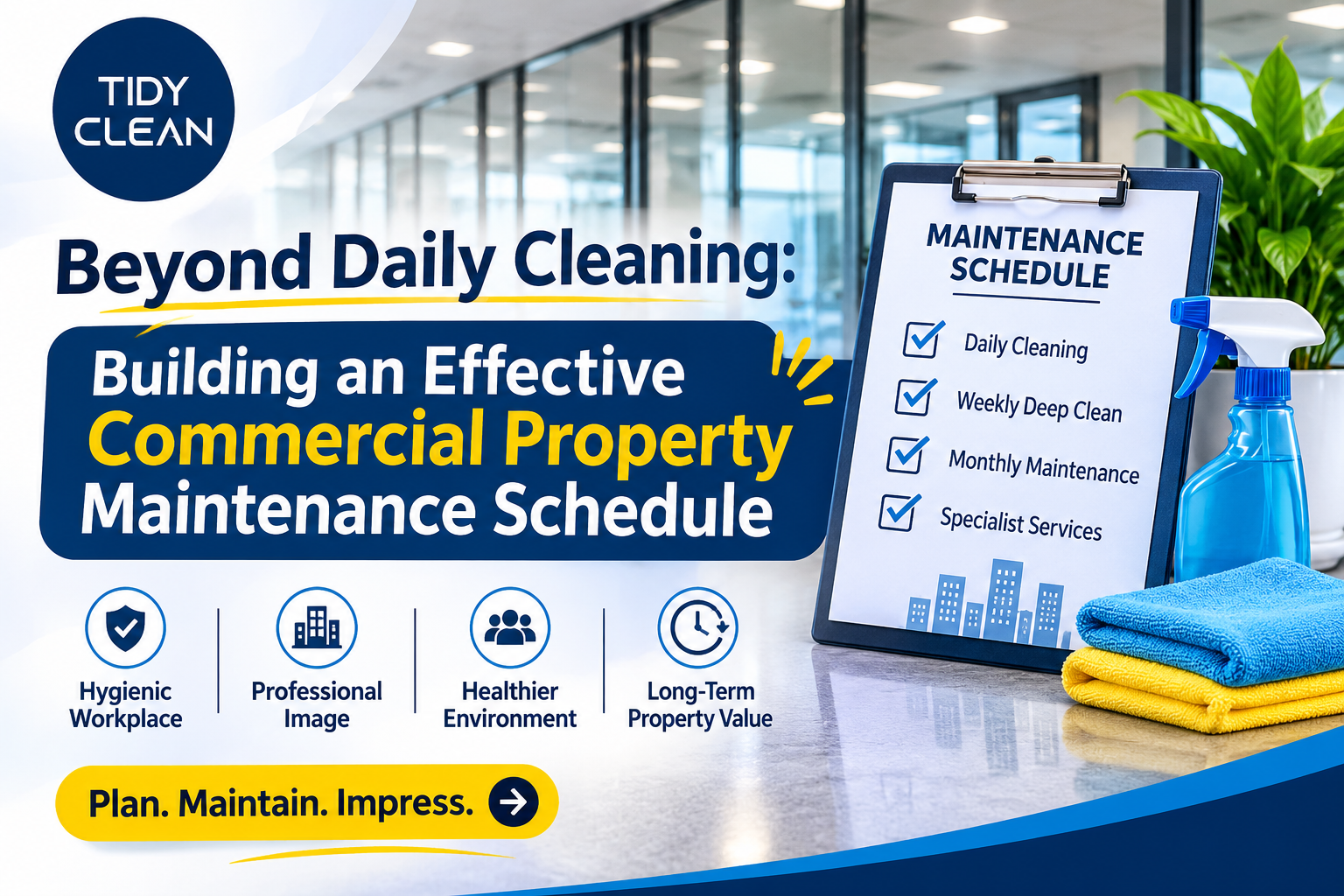
A clean commercial property is more than just an attractive place to work. It reflects your business standards, supports employee wellbeing, creates a positive impression on visitors and helps protect your property’s long-term value. However, maintaining a consistently clean and presentable workplace requires more than occasional cleaning or basic daily routines. Businesses need a structured commercial property maintenance schedule that addresses everyday cleaning requirements as well as deeper maintenance needs.
“By investing in commercial cleaning Melbourne services, businesses can maintain consistently clean and hygienic premises, protect their facilities from avoidable wear and tear and create a healthier environment for employees, customers and visitors.”
For businesses across Melbourne, managing commercial properties can be challenging. High foot traffic, changing weather conditions, shared facilities and continuous business operations can contribute to dirt accumulation, surface deterioration and hygiene concerns. Without a proper maintenance plan, minor cleaning issues can gradually become expensive problems.
Let’s explore how to develop an effective maintenance schedule that keeps your commercial property cleaner, healthier and professionally maintained throughout the year.
Why is a Commercial Property Maintenance Schedule Important?
A commercial property experiences continuous use. From reception areas and office floors to washrooms, kitchens and shared spaces, every area requires attention at different intervals.
A structured maintenance schedule ensures that cleaning tasks are completed consistently rather than waiting until visible problems appear.
Here are some important benefits:
- Maintains workplace hygiene: Regular cleaning helps manage dust, dirt, spills and frequently touched surfaces.
- Creates a professional impression: Clean floors, windows and common areas help businesses make a positive impression on customers and visitors.
- Protects property assets: Appropriate maintenance can help extend the usable life of carpets, flooring, furniture and other surfaces.
- Supports employee comfort: A well-maintained workplace provides a more comfortable and organised environment.
- Reduces unexpected maintenance costs: Identifying minor issues early can help prevent more significant maintenance problems.
- Improves cleaning efficiency: Assigning tasks to specific intervals makes it easier to manage cleaning responsibilities.
For Melbourne businesses, a planned approach to commercial property cleaning can make ongoing facility management considerably easier.
1. Establish Daily Cleaning Priorities
Daily cleaning is the foundation of any effective commercial maintenance plan. High-traffic areas experience frequent use and can quickly accumulate dirt, dust and waste.
Your daily cleaning checklist should include:
- Vacuuming or sweeping frequently used floors.
- Mopping hard flooring where appropriate.
- Cleaning reception counters and shared desks.
- Emptying rubbish bins and replacing liners.
- Cleaning washrooms, toilets and washbasins.
- Wiping frequently touched surfaces such as door handles and switches.
- Maintaining kitchenettes and shared dining areas.
Businesses should pay particular attention to reception areas, entrances, corridors and washrooms because these spaces often experience consistent foot traffic.
Professional office cleaning Melbourne services can help businesses maintain these daily standards while allowing employees to focus on their regular responsibilities.
2. Schedule Weekly Deep Cleaning Tasks
Daily cleaning maintains general presentation, but some areas require more detailed attention.
Weekly cleaning should focus on locations where dust, grease, marks and dirt gradually accumulate.
Consider including the following activities:
Carpet and floor maintenance: Vacuum carpeted areas thoroughly, address visible stains and clean hard floors according to their surface requirements.
Glass and internal windows: Remove fingerprints, smudges and visible marks from glass partitions, internal windows and doors.
Furniture cleaning: Wipe office furniture, meeting tables, chairs and shared equipment.
Kitchen cleaning: Clean appliance exteriors, cupboard surfaces, splashbacks and frequently used preparation areas.
Washroom detailing: Give additional attention to fixtures, partitions, mirrors, taps and hard-to-reach areas.
Creating a weekly cleaning routine helps prevent everyday dirt from developing into more difficult cleaning problems.
3. Include Monthly Commercial Cleaning and Maintenance
Monthly maintenance provides an opportunity to inspect areas that may not require daily or weekly attention.
It also helps businesses identify developing cleaning issues before they affect the overall condition of the property.
Some useful monthly activities include:
- Deep cleaning carpets and upholstery when required.
- Removing stubborn marks from walls and doors.
- Cleaning air vents and accessible dust-prone areas.
- Detailed cleaning of skirting boards and corners.
- Inspecting floor surfaces for stains, damage or deterioration.
- Checking washroom fixtures and shared facilities.
- Reviewing the condition of high-traffic areas.
For commercial properties with extensive carpeted flooring, professional carpet cleaning Melbourne services can help remove accumulated soil and refresh heavily used areas.
The frequency of specialist cleaning should depend on carpet material, foot traffic, manufacturer recommendations and the property’s requirements.
4. Plan Seasonal Cleaning Around Melbourne’s Changing Weather
Melbourne’s changing weather can influence how quickly commercial properties become dirty.
Rainy conditions can bring mud and moisture indoors, while dry and windy periods may contribute to dust accumulation. Seasonal changes can also increase the maintenance requirements of building entrances, windows and outdoor spaces.
A seasonal cleaning plan should consider:
Autumn: Focus on entrance areas, windows, floor surfaces and the removal of accumulated outdoor debris.
Winter: Pay additional attention to wet floors, entrance mats, moisture management and washroom hygiene.
Spring: Schedule detailed dust removal, carpet maintenance, window cleaning and general property refreshes.
Summer: Maintain outdoor areas, entrances and frequently used shared facilities while monitoring dust and surface cleanliness.
A seasonal maintenance approach helps businesses respond to changing environmental conditions instead of relying on the same cleaning routine throughout the year.
5. Give High-Touch Surfaces Special Attention
Frequently touched surfaces are among the most important areas in a shared commercial environment.
Door handles, lift buttons, light switches, reception counters, keyboards and shared kitchen appliances can receive repeated contact throughout the working day.
An effective maintenance schedule should identify these surfaces and establish suitable cleaning and disinfection procedures.
Businesses should consider:
- Identifying frequently touched surfaces throughout the premises.
- Establishing appropriate cleaning frequencies.
- Using suitable cleaning products for different materials.
- Following product instructions and recommended contact times.
- Maintaining cleaning records for accountability.
Consistent attention to high-touch surfaces supports a more hygienic workplace and demonstrates a commitment to maintaining shared facilities.
6. Create a Cleaning Schedule Based on Property Requirements
Not every commercial property requires the same cleaning frequency.
A small professional office, a busy retail facility and a large commercial building have different maintenance requirements.
Before developing your schedule, assess the following factors:
Property size: Larger premises may require additional cleaning time, staff and equipment.
Daily foot traffic: Busy entrances, reception areas and corridors may need more frequent attention.
Business operations: Hospitality facilities, healthcare environments and educational premises have different hygiene requirements.
Flooring and surfaces: Carpets, tiles, vinyl and polished flooring require different cleaning methods.
Operating hours: Cleaning activities should be planned around business operations to minimise disruption.
Once these requirements are understood, businesses can create a practical maintenance schedule that balances cleaning quality, operational convenience and available resources.
7. Monitor Cleaning Quality and Review the Schedule
Creating a maintenance schedule is only the beginning. Businesses should regularly review whether the cleaning plan is delivering the expected results.
A simple cleaning inspection system can help identify missed tasks, recurring problems and areas requiring additional attention.
Consider introducing:
- Daily and weekly cleaning checklists.
- Monthly property inspections.
- Cleaning completion records.
- Feedback from employees and facility managers.
- Periodic reviews of cleaning frequencies.
- Records of specialist cleaning and maintenance activities.
These measures make it easier to maintain consistent standards and adjust the cleaning schedule as the property evolves.
Working with professional commercial cleaners can also help businesses establish suitable cleaning routines and maintain their premises more efficiently.
Also explore: Commercial Cleaning Services Melbourne: Benefits for Offices, Retail & Commercial Spaces
Why Choose Professional Commercial Cleaning Services in Melbourne?
Managing an entire commercial property requires time, planning and the right cleaning approach. While internal staff may handle basic housekeeping, specialised cleaning tasks often require professional equipment, appropriate products and trained cleaning personnel.
Tidy Clean provides professional cleaning solutions for Melbourne residential and commercial properties, including offices, commercial spaces and specialised facilities.
Whether your property requires regular office cleaning, commercial carpet cleaning, deep cleaning or customised maintenance support, a planned cleaning approach can help maintain a cleaner and more welcoming environment.
Instead of waiting for dirt, stains and maintenance issues to become noticeable, take a proactive approach to property care.
Build a Cleaner, Better-Maintained Commercial Property with Tidy Clean
Your commercial property deserves more than occasional cleaning. It needs a consistent maintenance approach that protects its appearance, supports workplace hygiene and creates a positive experience for everyone who enters.
With the right combination of daily cleaning, weekly detailing, monthly deep cleaning and seasonal maintenance, businesses can maintain their premises more effectively throughout the year.
A clean, hygienic and well-maintained commercial property creates a lasting impression on customers while supporting a healthier workplace for employees. Don’t wait for dirt, stains or maintenance issues to become bigger problems.
CTA:
Let Tidy Clean take care of your commercial cleaning needs with professional, reliable and customised cleaning solutions across Melbourne.
Don’t let dirt, neglected spaces and inconsistent cleaning affect your business image. Partner with Tidy Clean for professional commercial cleaning solutions designed around your property’s needs.
Ready to give your workplace the professional standard it deserves?
Contact us today for a customised commercial cleaning solution!