


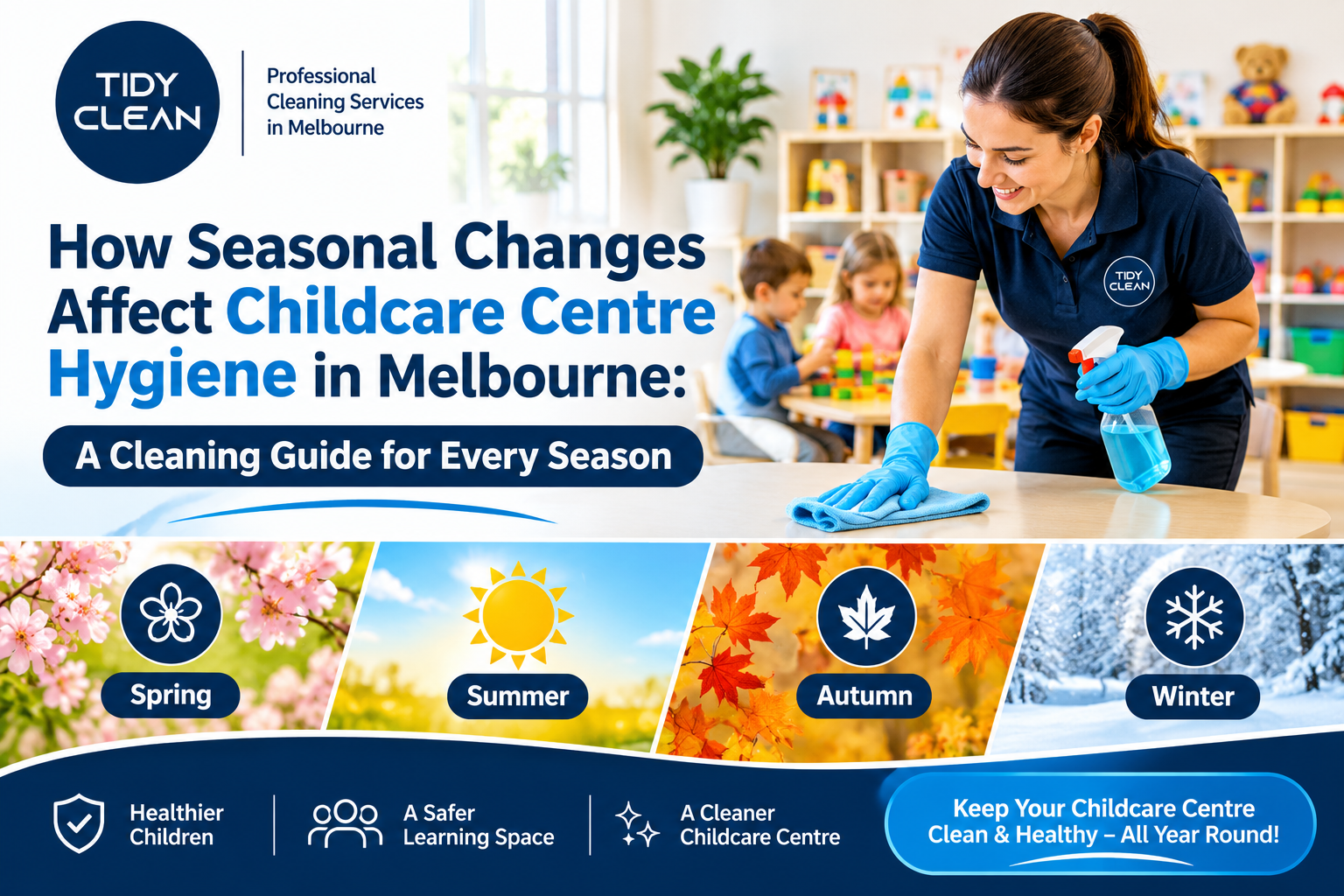
Maintaining a clean and hygienic childcare environment is essential for protecting children’s health, supporting educators and creating a safe learning atmosphere. However, keeping a childcare centre consistently clean throughout the year can be challenging because seasonal changes bring different hygiene concerns. From winter illnesses and spring pollen to summer dust and autumn debris, every season creates unique cleaning requirements.
For childcare centres across Melbourne, adapting cleaning routines to changing weather conditions is an important part of maintaining a healthy environment. A well-planned childcare cleaning Melbourne program helps address seasonal challenges, maintain hygienic learning spaces and support children’s everyday wellbeing.
Whether you manage a kindergarten, daycare facility or early learning centre, understanding how seasonal changes affect hygiene can help you establish a more effective cleaning routine.
Why Seasonal Cleaning Matters in Melbourne Childcare Centres
Melbourne experiences noticeable seasonal variations, including cold and wet winters, warmer summers, pollen-heavy spring conditions and unpredictable autumn weather. These changes can influence how dirt, dust, allergens and germs enter and spread throughout childcare facilities.
Children regularly interact with toys, tables, learning materials, playground equipment and shared surfaces. Consequently, areas that appear clean can still require regular attention, particularly during periods when illness or environmental contaminants become more common.
A seasonal cleaning strategy helps childcare centres:
- Maintain hygienic classrooms and play areas.
- Reduce the accumulation of dust, dirt and allergens.
- Keep bathrooms, kitchens and nappy-changing areas clean.
- Maintain outdoor play equipment and shared facilities.
- Support consistent infection prevention practices.
- Create a welcoming environment for children, parents and educators.
Rather than following the same cleaning routine throughout the year, childcare facilities should review their cleaning requirements as environmental conditions change.
1. Summer: Managing Heat, Dust and Increased Outdoor Activity
Key hygiene focus : Dust control, outdoor cleaning and bathroom hygiene.
Summer brings warmer temperatures and increased outdoor activities across Melbourne. Children spend more time playing in gardens, playgrounds and outdoor learning spaces. While outdoor activities encourage physical development, they can also introduce additional dirt, dust, sand and debris into indoor areas.
Warmer conditions also make it important to maintain clean food preparation areas, drinking stations and bathroom facilities.
Important summer cleaning practices:
- Clean floors regularly to remove dust, sand and outdoor debris.
- Wipe tables, chairs and frequently touched surfaces throughout the day.
- Clean outdoor play equipment and shared toys according to their materials and cleaning requirements.
- Maintain hygienic kitchens, food preparation surfaces and eating areas.
- Pay attention to bathroom floors, sinks, taps and toilet facilities.
- Empty rubbish bins regularly to prevent unpleasant odours and pest attraction.
Carpets, rugs and upholstered furniture can also collect dust and dirt brought in from outdoor activities. Periodic professional carpet cleaning can help maintain these surfaces and improve the overall presentation of indoor learning environments.
For centres looking to maintain consistent hygiene, professional daycare cleaning Melbourne services can help address areas that require more detailed attention during the warmer months.
2. Autumn: Preventing Dirt and Debris from Accumulating
Key hygiene focus : Entryways, floors, carpets and outdoor maintenance.
Autumn brings cooler weather, falling leaves and changing rainfall patterns. Children and educators may carry mud, moisture, leaves and dirt into classrooms, corridors and shared spaces.
Entryways become particularly important because they are among the first areas exposed to outdoor contaminants. If these spaces are not maintained properly, dirt can quickly spread throughout the facility.
Important autumn cleaning practices:
- Sweep and clean entrances frequently to remove fallen leaves and dirt.
- Use suitable floor-cleaning methods to address muddy footprints.
- Vacuum carpets and rugs to remove accumulated dust and debris.
- Clean windows, window frames and surrounding surfaces.
- Check outdoor play areas for fallen branches, leaves and other potential hazards.
- Maintain clean storage areas for shoes, bags and children’s belongings.
Autumn is also a suitable time to review the centre’s existing cleaning schedule before the colder months arrive. Pay particular attention to high-touch surfaces such as door handles, light switches, shared desks and play equipment.
A structured commercial cleaning Melbourne program can help childcare facilities maintain clean classrooms, common areas and shared facilities as seasonal conditions change.
3. Winter: Strengthening Hygiene and Infection Prevention
Key hygiene focus : High-touch surfaces, bathrooms, ventilation and shared equipment.
Winter is one of the most important seasons for childcare hygiene. Children spend more time indoors because of colder temperatures and wet weather, increasing their interaction with shared toys, furniture and classroom equipment.
Respiratory illnesses, influenza and other seasonal infections can create additional challenges for childcare operators. Maintaining good cleaning practices alongside effective hand hygiene and appropriate illness-management procedures is therefore essential.
The National Health and Medical Research Council (NHMRC) recommends regular hand hygiene, routine environmental cleaning and appropriate cleaning after body-fluid spills as important infection prevention measures.
Important winter cleaning practices :
- Clean frequently touched surfaces, including door handles, switches and shared tables.
- Regularly clean and sanitise toys and frequently used learning materials.
- Maintain hygienic bathrooms, toilets and nappy-changing stations.
- Clean shared furniture, sleeping mats and other equipment according to their use.
- Address spills and bodily-fluid contamination promptly using appropriate procedures.
- Maintain suitable indoor ventilation to support fresh-air circulation.
Ventilation deserves particular attention during winter. Although opening windows may be difficult in cold weather, centres should use practical ventilation methods appropriate to the building and weather conditions.
Cleaning alone cannot prevent every infection. It should work alongside handwashing, appropriate exclusion of unwell children and staff, and the centre’s infection-control policies.
Professional childcare cleaning Melbourne services can provide additional support with detailed cleaning of classrooms, washrooms, common areas and other frequently used spaces.
4. Spring: Controlling Pollen, Allergens and Dust
Key hygiene focus : Dust removal, carpets, windows and outdoor play spaces.
Spring brings warmer temperatures, blooming plants and increased pollen levels across Melbourne. Although children enjoy spending more time outdoors, pollen and dust can enter childcare buildings through clothing, footwear, windows and ventilation systems.
For children who experience hay fever or allergies, maintaining a cleaner indoor environment can be particularly important.
Victoria also experiences grass pollen season during spring, which is relevant to childcare centres preparing for seasonal allergy and thunderstorm asthma risks.
Important spring cleaning practices :
- Dust shelves, furniture, window sills and other surfaces regularly.
- Clean floors to remove pollen and dust brought indoors.
- Vacuum carpets and rugs using suitable equipment.
- Clean indoor play equipment and shared learning resources.
- Maintain clean windows and surrounding surfaces.
- Inspect outdoor play equipment and remove accumulated dirt and debris.
- Follow relevant allergy-management and asthma action plans.
Carpets, soft furnishings and fabric-based play materials can collect dust and other airborne particles. Appropriate vacuuming and periodic professional cleaning can help maintain these areas.
Centres should also review outdoor cleaning and maintenance arrangements to ensure playgrounds, garden spaces and activity areas remain clean and safe.
How to Build an Effective Year-Round Childcare Cleaning Schedule
Seasonal cleaning works best when it is supported by a consistent cleaning plan. Childcare centres should identify high-priority areas, assign responsibilities and review cleaning requirements regularly.
Here is a practical cleaning schedule that facilities can adapt to their individual needs.
| Cleaning frequency | Recommended cleaning activities |
| Throughout the day | Attend spills, clean visibly dirty surfaces, maintain bathrooms and support hand hygiene. |
| Daily | Clean floors, toilets, kitchen surfaces, tables, frequently touched areas and commonly used equipment. |
| Weekly | Deep-clean suitable play equipment, furniture, storage areas and less frequently accessed surfaces. |
| Monthly or periodically | Review carpets, upholstery, windows, ventilation systems and outdoor facilities according to their condition. |
| Seasonally | Review cleaning requirements, inspect outdoor areas and adjust routines for weather-related hygiene concerns. |
The schedule should be adjusted according to the number of children, facility layout, activities, materials and specific hygiene risks. Any cleaning and sanitising procedures should follow product instructions and relevant childcare guidelines.
Read more: Child Care Cleaning Melbourne: Professional Cleaning for Safe and Hygienic Centres
Why Professional Childcare Cleaning Services Make a Difference
Maintaining a childcare centre requires more than occasional cleaning. Educators already have important responsibilities involving children’s supervision, learning and development. A structured professional cleaning arrangement can help ensure that detailed cleaning requirements receive appropriate attention.
Choosing experienced childcare cleaning services Melbourne can help centres maintain a consistent cleaning routine across classrooms, bathrooms, kitchens, corridors and shared spaces.
Professional cleaning support can include:
- Classroom and common-area cleaning.
- Bathroom and toilet cleaning.
- Floor and carpet maintenance.
- High-touch surface cleaning.
- Kitchen and shared-area cleaning.
- Detailed cleaning of suitable furniture and equipment.
- Seasonal deep-cleaning requirements.
At Tidy Clean, we understand the importance of maintaining clean and welcoming environments for children, educators and families. Our cleaning solutions are tailored to the requirements of different facilities, helping childcare operators maintain their spaces throughout changing seasonal conditions.
Keep Your Melbourne Childcare Centre Clean in Every Season with Tidy Clean
Every season brings different cleaning challenges, but maintaining a hygienic childcare environment should remain a year-round priority. From removing summer dust and autumn debris to managing winter hygiene requirements and spring allergens, a proactive cleaning strategy helps childcare centres maintain cleaner and more comfortable spaces.
CTA : Don’t let seasonal cleaning challenges compromise your centre’s cleanliness. Choose Tidy Clean’s professional childcare cleaning Melbourne services to maintain fresh, hygienic and welcoming spaces for children, educators and families.
Ready to make your childcare centre cleaner in every season?
Contact Tidy Clean today to discuss your cleaning requirements and discover a tailored cleaning solution for your facility.