

Introduction
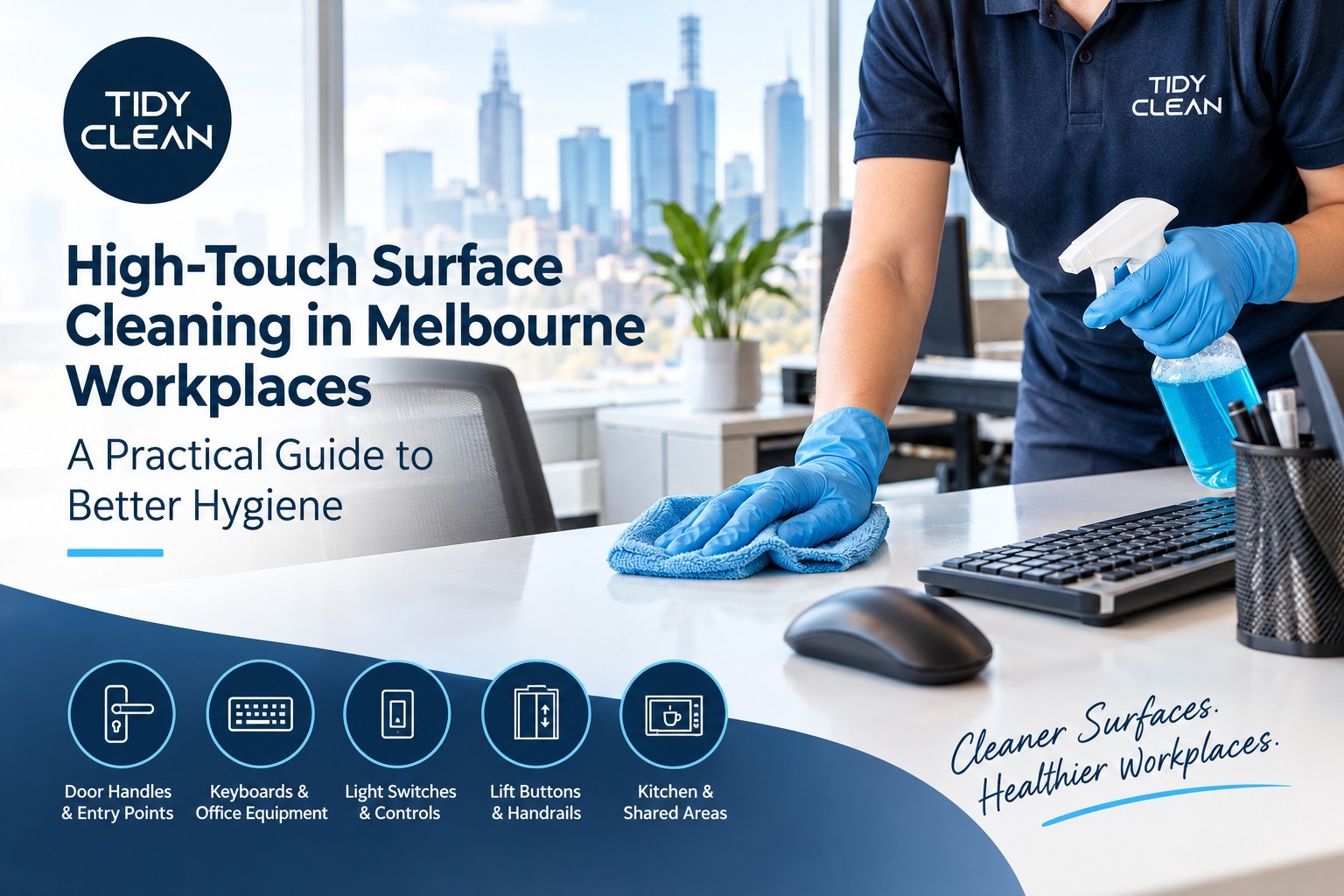
Maintaining a clean and hygienic workplace is essential for protecting employee wellbeing, supporting productivity, and creating a positive impression on clients and visitors. While floors, windows, and visible surfaces often receive regular attention, frequently touched areas can be overlooked during everyday cleaning routines. Door handles, light switches, keyboards, lift buttons, shared desks, and kitchen appliances may all accumulate dirt and microorganisms through repeated contact.
Professional high-touch surface cleaning in Melbourne workplaces helps businesses maintain a more hygienic environment by focusing on the surfaces people interact with throughout the day. Whether you manage an office in Melbourne CBD, a commercial property in Richmond, a corporate workspace in Southbank, or a busy facility in Docklands, a structured cleaning plan can help reduce contamination risks and improve everyday workplace hygiene.
This practical guide explains which surfaces require attention, how often they should be cleaned, and how Melbourne businesses can establish an effective high-touch cleaning routine.
What Is High-Touch Surface Cleaning?
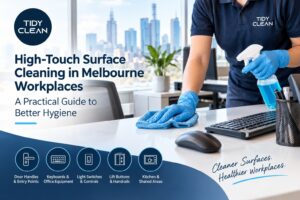
High-touch surface cleaning focuses on objects and areas that are frequently handled by employees, customers, contractors, and visitors. Because multiple people may touch the same surfaces throughout the day, these areas can become points where dirt and microorganisms accumulate and transfer between hands and surfaces.
Common examples include:
- Door handles, push plates, and entry access buttons
- Light switches and shared control panels
- Lift buttons, stair railings, and handrails
- Computer keyboards, mice, and shared office equipment
- Meeting room tables, chair arms, and shared desks
- Kitchen taps, refrigerator handles, and microwave controls
- Reception counters and visitor sign-in devices
- Shared telephones, printers, and photocopier controls
- Bathroom taps, flush buttons, and cubicle handles
Effective cleaning involves removing visible soil and contaminants using appropriate cleaning products and methods. Where disinfection is necessary, it should follow cleaning and product-label instructions. Cleaning and disinfecting are different processes, and the right approach depends on the surface, its use, and the workplace’s hygiene requirements.
Why High-Touch Surface Cleaning Matters in Melbourne Workplaces
1. Supports Better Workplace Hygiene
Offices and commercial buildings bring people together in shared environments. Employees may use the same meeting rooms, kitchen facilities, printers, and entry points throughout the day. Regular attention to frequently touched surfaces helps manage the accumulation and transfer of contaminants.
A consistent cleaning schedule supports broader workplace hygiene practices, including handwashing, appropriate ventilation, and staying home when unwell.
2. Helps Create a Healthier Working Environment
Workplace hygiene is an important part of employee wellbeing. When frequently handled surfaces are neglected, dirt and contaminants can build up in shared areas. A structured cleaning program helps maintain these surfaces and reinforces a workplace culture that values cleanliness and care.
Cleaning alone cannot eliminate every infection risk, but it can form a useful part of a wider prevention strategy.
3. Creates a Professional Impression
Clients, customers, and visitors often notice the condition of reception counters, meeting tables, door handles, and shared facilities. Fingerprints, sticky surfaces, and visible grime can make a workplace appear poorly maintained.
For businesses across Melbourne CBD, South Yarra, Carlton, and surrounding commercial districts, consistent high-touch surface cleaning helps maintain a welcoming and professional appearance.
4. Supports Shared Equipment Maintenance
Keyboards, desk phones, printer controls, and other shared equipment can collect dust, oils, and residue through daily use. Cleaning these items with compatible products helps maintain their condition while reducing the buildup of everyday grime.
Electronic equipment must be cleaned according to manufacturer instructions to avoid moisture damage and other issues.
How to Clean High-Touch Surfaces Effectively
A reliable cleaning process requires more than quickly wiping visible areas. Businesses should establish a consistent method that considers surface materials, cleaning frequency, product suitability, and the movement of staff through the workplace.
Step 1: Identify Frequently Touched Areas
Begin by inspecting the workplace and identifying surfaces that receive repeated contact. Consider entry points, shared workstations, meeting rooms, kitchen facilities, bathrooms, lifts, and reception areas.
The cleaning plan should reflect actual usage. A busy reception desk or shared printer station may need more frequent attention than a private office with limited occupancy.
Step 2: Choose Suitable Cleaning Products
Select cleaning products appropriate for the surface being treated. Follow the manufacturer’s instructions regarding dilution, application, contact time, and rinsing where required.
For surfaces that require disinfection, use a product suitable for the intended purpose and follow its label directions. Never mix cleaning chemicals, and ensure adequate ventilation when using products that require it.
Step 3: Use Appropriate Cleaning Equipment
Microfibre cloths can help remove dust and soil from many hard surfaces. Use clean cloths and suitable equipment to prevent transferring contamination from one area to another.
A colour-coded cleaning system can help distinguish cloths and tools used in kitchens, bathrooms, general office areas, and other designated zones. Replace or launder cleaning materials as required.
Step 4: Follow a Consistent Cleaning Sequence
A systematic approach reduces the chance of missing important surfaces. Clean from cleaner areas towards dirtier areas, and work methodically through each room or zone.
Pay attention to frequently overlooked details, including the edges of door handles, chair arms, tap controls, shared touchscreens, and the undersides or sides of commonly handled equipment where appropriate.
Step 5: Disinfect When Required
Cleaning should come first when a surface is visibly dirty. If disinfection is required by the workplace’s risk assessment, applicable hygiene guidance, or a specific contamination event, use an appropriate disinfectant according to its label.
Allow the required contact time and ensure the surface is handled according to product instructions. Applying disinfectant and immediately wiping it away may prevent the product from working as intended.
Step 6: Inspect and Record Completed Tasks
A cleaning checklist helps supervisors verify that important surfaces have been addressed. Record completed tasks where appropriate, note any supply shortages, and report damaged surfaces or equipment that cannot be safely cleaned using routine methods.
How Often Should High-Touch Surfaces Be Cleaned?
There is no single frequency suitable for every workplace. The right schedule depends on occupancy, shared use, surface type, workplace activities, and the level of contamination risk.
Consider the following practical starting points:
- Busy entry points and reception areas: Inspect frequently and clean multiple times throughout the day when traffic is high.
- Shared kitchens and lunchrooms: Clean frequently handled appliance controls, taps, and food-preparation surfaces after use as appropriate.
- Meeting rooms and shared desks: Clean between users where practical, particularly in high-turnover environments.
- Shared keyboards, phones, and office equipment: Clean regularly and between users when equipment is shared, following manufacturer instructions.
- Bathrooms and washrooms: Follow a documented schedule based on usage, with additional attention during busy periods.
- Lift buttons and handrails: Include them in routine cleaning and increase frequency when occupancy or contact levels justify it.
These are planning recommendations rather than universal hygiene standards. Businesses should adjust frequencies to their own risk assessments, industry requirements, and operational needs.
Common High-Touch Cleaning Mistakes to Avoid
Even workplaces with regular cleaning services can overlook important details. Avoid these common mistakes:
Cleaning only visible dirt: A surface can appear clean while still requiring routine cleaning or appropriate disinfection.
Using one cloth everywhere: Reusing contaminated cloths can transfer soil between workstations, kitchens, and bathrooms.
Ignoring shared equipment: Printers, telephone handsets, meeting room controls, and access panels are easily missed.
Using unsuitable chemicals: Incorrect products can damage finishes, remove protective coatings, or harm electronic equipment.
Skipping product contact times: Disinfectants must be used according to label instructions to achieve their intended effect.
Following the same schedule in every area: High-traffic spaces may need more frequent attention than lightly used rooms.
Neglecting cleaning records: Without checklists or inspections, businesses may struggle to identify missed tasks or recurring problems.
Why Choose Professional High-Touch Surface Cleaning in Melbourne?
Professional commercial cleaning can help businesses maintain a consistent approach to frequently touched surfaces without placing the entire responsibility on employees.
A professional cleaning provider can assess the workplace, identify priority areas, select appropriate methods, and establish a schedule suited to occupancy and business operations. Services can also be coordinated with general office cleaning, washroom maintenance, kitchen cleaning, and other commercial cleaning requirements.
For workplaces in Melbourne CBD, Docklands, Richmond, Southbank, Carlton, and nearby business districts, a tailored plan can help address the needs of different environments, from small offices to larger commercial premises.
When choosing a provider, ask about staff training, cleaning checklists, product suitability, quality inspections, and the flexibility to adjust services as workplace needs change.
Conclusion: Make Workplace Hygiene a Daily Priority
High-touch surfaces play an important role in everyday workplace hygiene. Door handles, lift buttons, shared equipment, kitchen controls, and reception counters all deserve attention as part of a well-planned cleaning routine.
By identifying priority surfaces, using appropriate products, following consistent procedures, and adjusting cleaning frequencies to actual work place conditions, Melbourne businesses can maintain cleaner shared spaces and support a more professional working environment.
Tidy Clean provides cleaning solutions tailored to the needs of homes, offices, and commercial properties. If your workplace needs a more structured approach to high-touch surface cleaning, contact Tidy Clean to discuss your requirements and develop a cleaning plan that suits your premises.
Ready to improve workplace hygiene? Visit https://tidyclean.com.au/ to learn more about Tidy Clean’s professional cleaning services and request a solution tailored to your Melbourne business.