

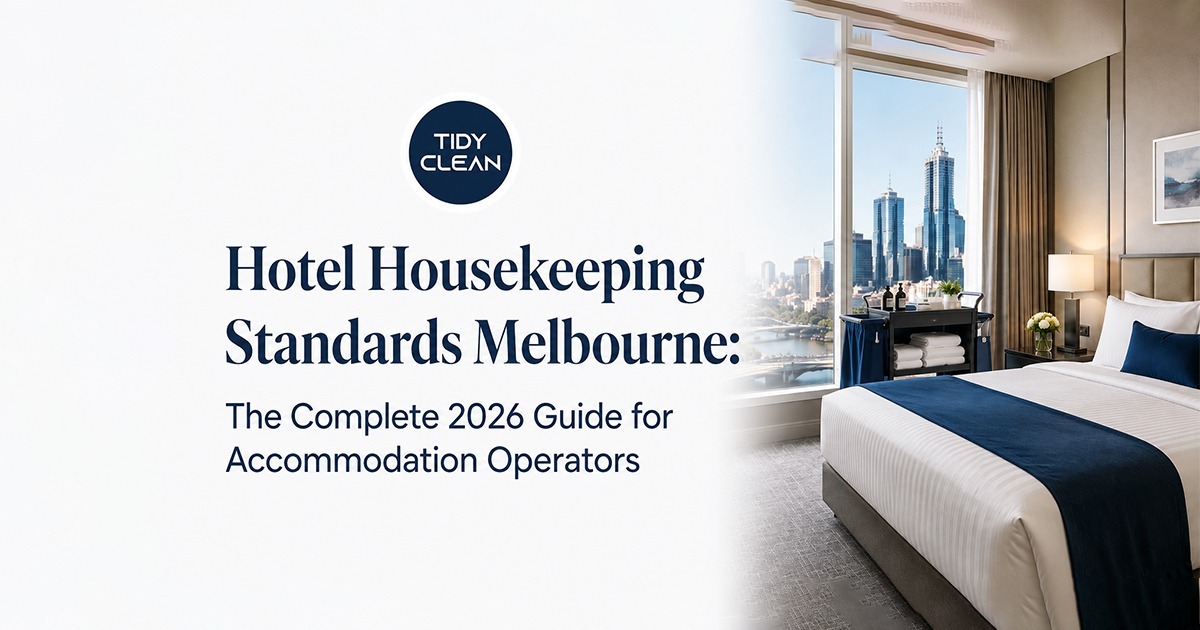
A guest forgives a slow check-in. They rarely forgive a hair in the shower recess. In a Melbourne accommodation market where one bad review can sit at the top of your Google listing for months, hotel housekeeping standards are the product, not a back-of-house detail. This guide sets out what a defensible standard looks like in 2026 — the checklists, frequencies and compliance points that hold up under audit.
Whether you run a boutique property in Fitzroy, a serviced apartment block in Southbank or a motel on the Princes Highway, the same principles apply — and documenting them is what separates properties that hold a 4.5-star rating from those that hope for one. If you are weighing up in-house capability against specialist housekeeping services for hotels, the standards below are the benchmark either way.
Free on-site housekeeping assessment. Get a walk-through of your rooms and public areas, plus an obligation-free quote within 30 minutes. Call 0404 352 582 or request your free quote.
Why Hotel Housekeeping Standards Matter in Melbourne in 2026
Melbourne’s accommodation sector is competitive, seasonal and heavily review-driven. Standards slip quietly, then show up publicly.
- Cleanliness is the most-commented attribute in accommodation reviews — and unlike location, it is something you fully control.
- Housekeeping compliance is actively policed. A Fair Work Ombudsman inquiry into housekeeping at four and five-star hotels in Melbourne, Sydney and Brisbane found housekeepers had been short-changed more than $57,000, with contractors incorrectly applying the Hospitality Industry (General) Award instead of the Cleaning Services Award.
- Melbourne’s event calendar creates brutal turnover peaks. Grand Final week, the Australian Open, the Grand Prix and the spring carnival compress months of room turns into days.
- Staff turnover erodes institutional knowledge. If your standard lives in a supervisor’s head rather than a written checklist, it leaves when they do.
The properties that stay consistent are not the ones with the best cleaners. They are the ones with the clearest system.
What “Housekeeping Standards” Actually Means
A housekeeping standard is a written, measurable specification of what a clean room looks like — not a general expectation that rooms be tidy. It has four parts.
Scope defines every surface, fixture and item in a room type, including the ones nobody looks at: skirting boards, air-conditioning vents, the top of the wardrobe, the back of the toilet cistern.
Frequency separates daily servicing from periodic deep cleaning — mattress rotation, carpet extraction, curtain laundering, grout restoration. Confusing the two is the most common cause of gradual room decay.
Method specifies the product, the tool and the sequence: top-to-bottom, clean-to-dirty, colour-coded cloths.
Verification is the inspection score. A standard nobody audits is a suggestion.
1. Build a Room Checklist That Leaves Nothing to Memory
Your checklist should be room-type specific and written down — printed or in an app. For a standard queen room it typically runs to 45–70 line items.
- Entry: door, handle, security latch, peephole, back-of-door signage
- Sleeping area: headboard, bedside tables, lamps, switches, remote, phone
- Wardrobe and desk: hangers counted, safe reset, iron and board, power points
- Windows: sills, tracks, curtain hems, blind cords
- Minibar and kettle: kettle descaled, cups replaced not rinsed, sachets restocked
- Floor: edges, corners, under bed, behind door
The details guests notice most are the ones cleaners skip most: the kettle, the remote, the light switches.
2. Split Daily Servicing From Deep Cleaning
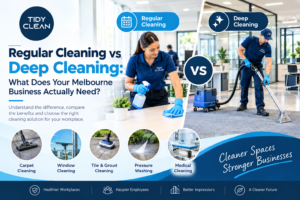
Daily servicing keeps a room presentable. Deep cleaning keeps it from ageing. Run them on separate schedules with separate budgets. Tasks that should never sit inside a 25-minute room turn include mattress rotation, upholstery shampooing, curtain laundering, air-conditioning filter cleaning and full carpet extraction. Most Melbourne properties run a rolling cycle so every room leaves inventory once or twice a year.
3. Set the Bathroom Standard Highest
The bathroom decides the review. It carries the highest hygiene risk and the lowest tolerance for error.
- Toilet cleaned inside, outside, behind and at the floor seal, with a dedicated cloth
- Shower screen dried and polished, not just rinsed — water spotting reads as “not cleaned”
- Grout and silicone checked for mould at every departure clean, with professional tile and grout cleaning booked before discolouration sets
- Extraction fan grille wiped and free of lint
- Amenities placed to a consistent standard, not left on the vanity
- Hair check: dry cloth over the floor, drain and shower recess as the final step
4. Get Linen and Bed-Making Right
Linen is the most tactile part of the guest experience and the most visible failure point.
- Change on departure without exception; on stayovers, honour your stated policy
- Inspect every sheet and pillowcase for stains, thinning and tears as it leaves the bag
- Maintain at least three par sets per bed so linen is never rushed back damp
- Use mattress and pillow protectors on every bed and log their rotation
- Standardise the make: same fold, same pillow arrangement, every room
5. Colour-Code Cloths and Control Your Chemicals
Cross-contamination between bathroom and guest surfaces is the hygiene failure most likely to make someone ill. A four-colour cloth system — red for toilets, yellow for bathroom surfaces, blue for guest areas, green for kitchenettes — solves it cheaply.
Chemical safety is a legal obligation. Under the model WHS framework you must control the risks of the chemicals your staff handle, keep a register and hold current safety data sheets; Safe Work Australia’s code of practice for managing hazardous chemicals sets out what compliance looks like. Practical minimums: no unlabelled decanting, no mixing, gloves and eye protection on every trolley, documented induction training.
6. Treat Floors and Soft Furnishings as Assets
Carpet in a hotel corridor absorbs years of domestic wear in a single season. Vacuuming maintains appearance; it does not remove embedded soil, allergens or odour.
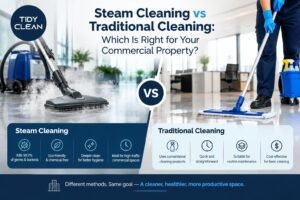
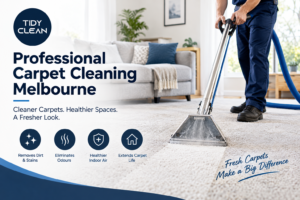
Schedule professional carpet cleaning for commercial properties across guest rooms and corridors on a documented cycle, and use hot water extraction or commercial steam cleaning for upholstery and mattresses. Properties that defer this replace carpet years early — a capital cost many times the maintenance spend.
7. Do Not Forget the First 30 Seconds
Guests judge cleanliness before they reach the room. Entry glass, lobby floors, lift interiors and the car park all feed the impression.
- Streak-free window cleaning in Melbourne for entry glass and ground-floor windows, monthly
- Pressure washing for paths, car parks and bin areas, quarterly or after heavy weather
- Lift interiors, handrails and door tracks wiped daily
8. Inspect, Score and Act on the Numbers
Verification turns a checklist into a standard.
- Inspect at least 10% of departure cleans daily, chosen at random
- Score against the same checklist the cleaner used — never a different one
- Set a pass threshold (95% is a common benchmark) and re-clean anything below it
- Track scores by cleaner and room type; patterns reveal training gaps, not bad staff
- Map guest cleanliness comments back to specific checklist items each week
Housekeeping Frequency Schedule for Melbourne Properties
| Task | Frequency | Typically handled by |
| Departure clean (full room) | Every checkout | In-house or contract housekeeping |
| Stayover service | Daily or per policy | In-house housekeeping |
| Public area and lobby clean | Daily | Housekeeping or commercial cleaner |
| Corridor vacuum and spot clean | Daily | Housekeeping |
| Entry and ground-floor window cleaning | Monthly | Specialist contractor |
| Carpet hot water extraction (rooms) | Every 6–12 months | Specialist contractor |
| Upholstery and mattress steam cleaning | Every 6–12 months | Specialist contractor |
| Tile and grout restoration (bathrooms) | Every 12 months | Specialist contractor |
| Pressure washing (external areas) | Quarterly | Specialist contractor |
| Air-conditioning filter clean | Per manufacturer schedule | Maintenance contractor |
Common Housekeeping Mistakes That Cost Melbourne Hotels Reviews
- Timing rooms instead of specifying them. “20 minutes per room” is a budget, not a standard. Write the specification first, then cost it.
- Training verbally. If it is not written down, it is not a standard and it will not survive turnover.
- Using one cloth for the whole room. Cheap to fix, expensive to ignore.
- Letting deep cleaning slide during peak season. The busiest months cause the most wear and are exactly when the cycle gets skipped.
- Assuming a contractor’s compliance is your problem solved. The Fair Work inquiry expected principals to check that pricing schedules allowed lawful rates to be paid.
- Ignoring odour. Guests register smell before sight. Damp carpet, blocked drains and unemptied bins undo an otherwise perfect clean.
Why Melbourne Accommodation Operators Outsource Housekeeping Support
- Melbourne-wide coverage with teams that scale during event peaks
- Fully insured and police-checked cleaners — a baseline when staff hold keycard access to occupied rooms
- 10+ years of commercial cleaning experience across hotels, serviced apartments, offices and schools
- Specialist equipment on hand for carpet extraction, steam cleaning, grout restoration and high-access window work, so deep-clean cycles never get deferred
- Eco-friendly products that meet guest expectations without compromising disinfection
- Flexible after-hours and split-shift scheduling built around checkout windows
- Same-day free quotes with a documented scope of works — a service Tidy Clean provides for more than 500 Melbourne businesses
If you are still benchmarking what this should cost, our breakdown of commercial cleaning costs in Melbourne sets out how per-room, hourly and square-metre pricing compare.
Ready to Lift Your Housekeeping Standard?
Consistent rooms are not an accident. They are a written specification, a realistic schedule and an inspection habit — put those three in place and the reviews follow. Book a free on-site housekeeping assessment and get an obligation-free quote within 30 minutes: call 0404 352 582, email info@tidyclean.com.au, or get in touch online.